
|
The Story Unfolding
|
|
When Jewish Time Traveled by Fire
|

|
In the letter
The Story Unfolding
Hebrew In Color
Take Me to Israel
This Week in Jewish History
Teach Me Something Jewish
Ask the Letter
|
Today, we know when these holidays happen because their dates are printed on calendars, programmed into phones, and announced months in advance. But the Jewish calendar did not always work that way. Long ago in ancient Israel, there was a time when the beginning of the Jewish month was not something that was scheduled.
It was witnessed.
Pick the next letter
|
The Jewish calendar is tied to the cycle of the moon, and in ancient times, when the first sliver of the new moon appeared, witnesses would travel to Jerusalem and testify before the Jewish high court about what they had seen. If the court accepted their testimony, Jerusalem officially declared that the new month had begun.
But there was a problem. How do you spread this important message across the Jewish world, from Israel to Babylonia — roughly modern-day Iraq, hundreds of miles away, quickly and efficiently?
The answer was with fire.
|
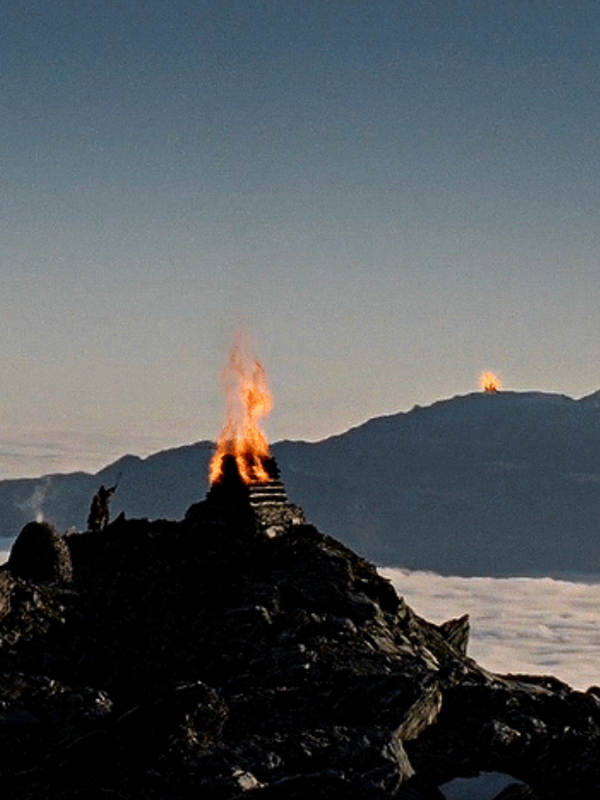
Picture the scene. Darkness across the mountains. Then a flame rises outside Jerusalem. Miles away, another appears. Then another. The Mishnah describes the signal spreading until the distant Jewish communities seemed to glow “like one great bonfire.”
“And from where did they light the signal fires? Until he could see the entire Diaspora before him like one great bonfire.”
And although today the Jewish calendar arrives automatically on our screens and smart devices, it once depended on human eyes watching the sky, witnesses making their way to Jerusalem, and fires leaping from mountain to mountain.
For a time, long ago in ancient Israel, Jerusalem was not only the city Jews prayed towards, but it was the place where Jewish time itself began.
|
Hebrew In Color
מַשּׂוּאָה
"Masu'ah"
Beacon — a raised signal fire
Masu’ah comes from the Hebrew root נ־שׂ־א, which means to lift, carry, or raise. Jewish tradition uses the word "masu’ah" to describe the great fires once lit on mountaintops to announce a new Jewish month had arrived. One flame answered another until Jerusalem’s message traveled east across the landscape.
|
|
א
|
|
TAKE ME TO ISRAEL
Why Even New Jerusalem Looks Ancient
|
There is something peculiar about Jerusalem: even the new buildings look old.
Drive through a modern neighborhood and you’ll see apartment towers, hotels, office buildings, schools, even shopping centers wrapped in the same pale stone that seems to belong to the ancient city. At sunset, entire neighborhoods glimmer gold. It almost has the feeling as if Jerusalem simply grew this way naturally over thousands of years.
But the look is deliberate.
|
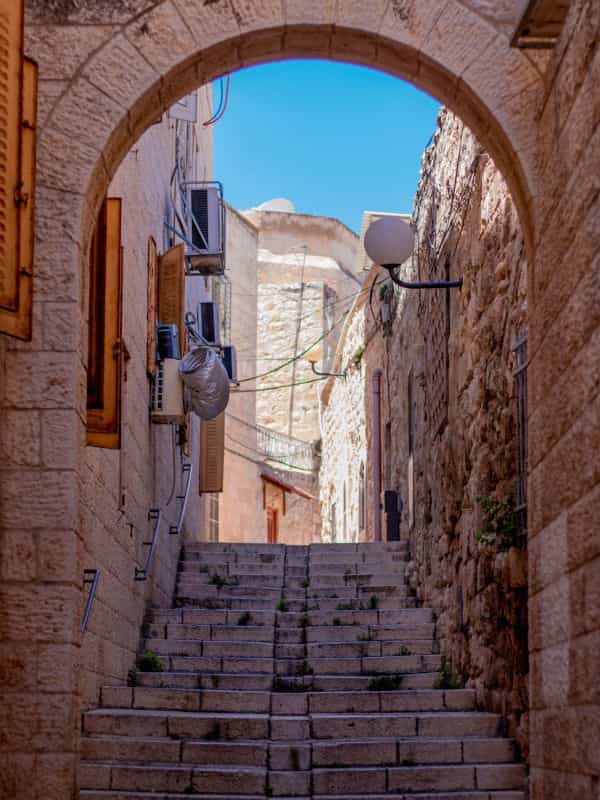
Jerusalem looks unusually ancient for a modern capital, but don’t let it fool you. The city’s famous stone appearance wasn’t simply inherited from the past. Modern Jerusalem was designed to look like Jerusalem.
|
This week in Jewish history
| ||
| ||
|
|
ב
|
|
TEACH ME SOMETHING JEWISH
Judaism Has Four "New Years"
|
Last week, Jews celebrated Rosh Hashanah, the Jewish New Year. But according to Jewish tradition, there are four “New Years.”
Sounds strange?
It may sound strange until you think about how we relate to time in our own modern world. January begins the calendar year. A school year begins in the fall. A business might begin its financial year in July. Each “new year” marks the point when a different kind of counting starts over.
So too in Judaism, there are not four versions of “January 1.” Instead, each of the four new years resets a different part of Jewish life. One marks the year for festivals. Another was used to count animal tithes. Another begins the year for legal and agricultural purposes. And Tu BiShvat, the fifteenth of the Hebrew month of Shevat, is the new year for trees.
The idea is wonderfully Jewish: Time does not run on a single clock. Different parts of life have different beginnings.
|
|
FILMS BY @alexanderincolor
The Jerusalem Scribe: A Short Film
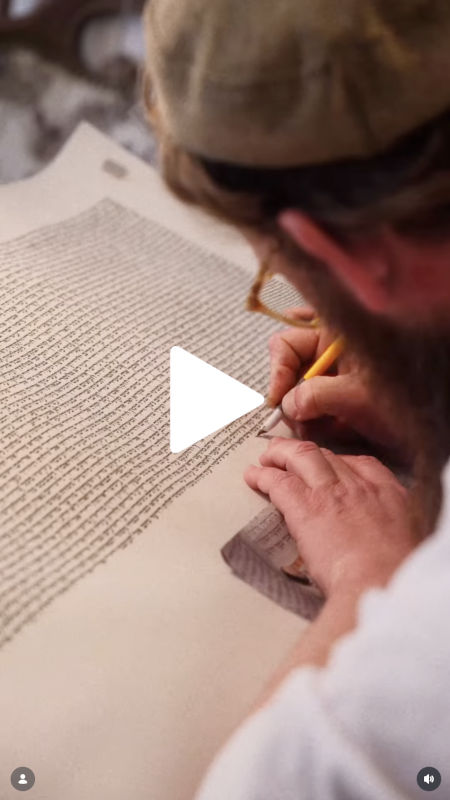
In the Old City of Jerusalem, Hebrew letters are still written by hand. Meet Kalman, a.k.a. The Jerusalem Scribe, a Torah scribe who practices the ancient Jewish art of writing sacred Hebrew texts by hand and turning them into beautiful pieces of scribal art. In this short film, step into the world behind the letters and see how this tradition, thousands of years old, is still being shaped by hand today.
|
 |
